
Congestion Worsens! Truckers Strike at 3 Major West Coast Ports, Severely Disrupting U.S.-Bound Shipping
Since labor negotiations between dockworkers and employers at West Coast ports failed on July 1, industry insiders have been speculating that a strike was inevitable. Unexpectedly, news of a wave of strikes broke less than half a month later.
Yesterday, a freight forwarder issued a notice stating:
“The three major U.S. ports of Los Angeles, Long Beach, and Oakland will go on strike starting the afternoon of July 13. The union will hold a meeting on Thursday, and some terminal gates will be closed for certain periods, making it impossible to schedule container pickups. The situation is being closely monitored. Pickup and return operations for containers arriving at the ports recently will be affected to some extent. Please take note!”

Another freight forwarder said that the strike was prompted by California's AB5 law. “Los Angeles truckers will strike on Wednesday, July 13, U.S. time; Long Beach will strike on Thursday, July 14, and Sunday, July 17. Some terminal gates will be closed for certain periods!This will affect container pickup and return operations!”
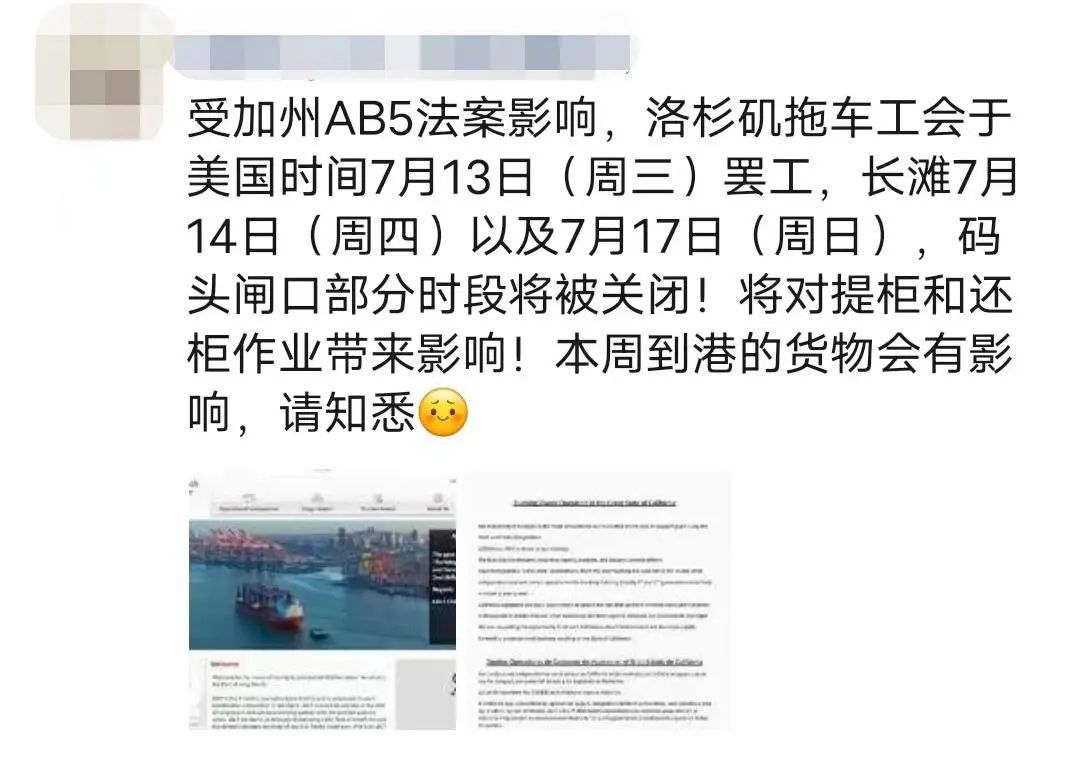
Meanwhile, several trucking companies in the northern region that transport containers to and from the Port of Oakland have received notice from owner-operators that they plan to stop work next Monday (July 18).
On the surface, AB5 seems like a positive change, allowing truck drivers to move from insecure “temporary work” to stable employment. In practice, however, it means truck drivers lose their freedom and can no longer take on work from trucking companies as independent contractors, while their pay and benefits are not as generous as the media claims.
One driver said: “I make $14 or $15 an hour driving for a large operator. People flipping burgers ask for $15 an hour.”
Also, when trucking companies convert drivers into employees, this results in high payroll taxes, which are shared by employees and companies. These tax revenues may also have been one of the reasons the California government passed the law. For trucking companies, hiring a worker to do the same job generally costs at least 30% more than contracting with an “independent contractor.”
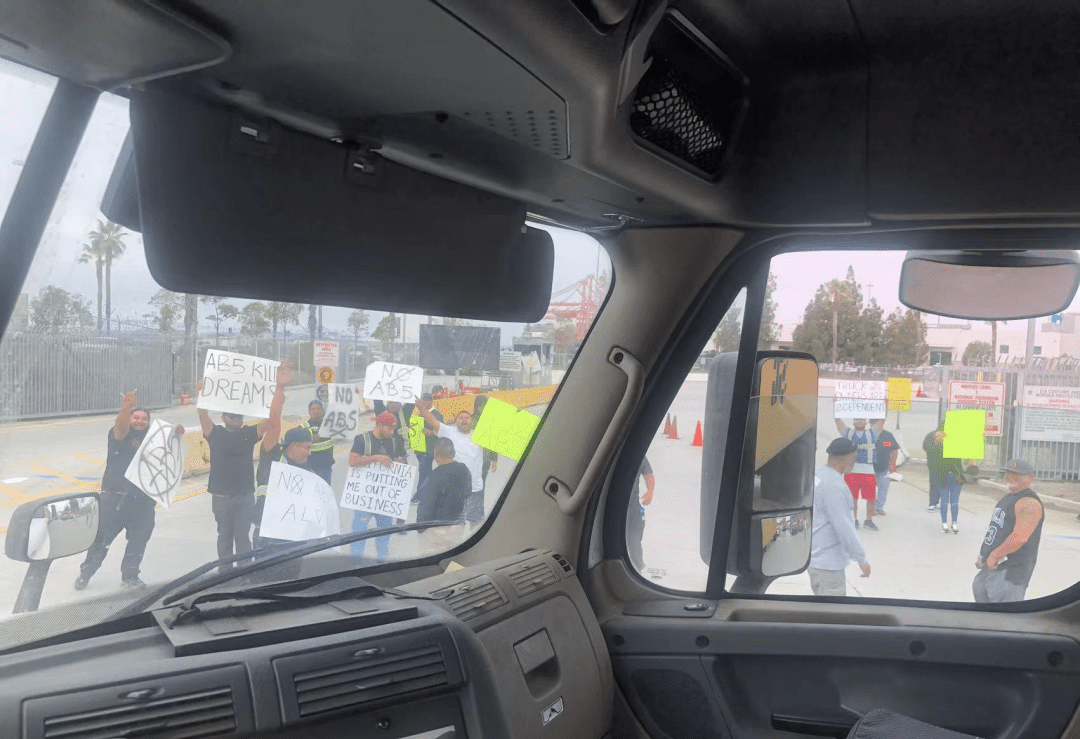
As a result, workers are beginning to realize that their dreams and rights are being taken away:
One owner-operator planning to join the port protest said he does not want to become an employee driver and would rather remain an independent contractor.
A California truck driver said: “During the COVID-19 pandemic, we were so busy that we didn’t realize AB5 was about to ruin us.”
However, after the California Trucking Association challenged AB5, the U.S. Supreme Court declined to hear the case on June 28 and sent it back to the U.S. Court of Appeals for the Ninth Circuit, prompting this workers’ strike protest.
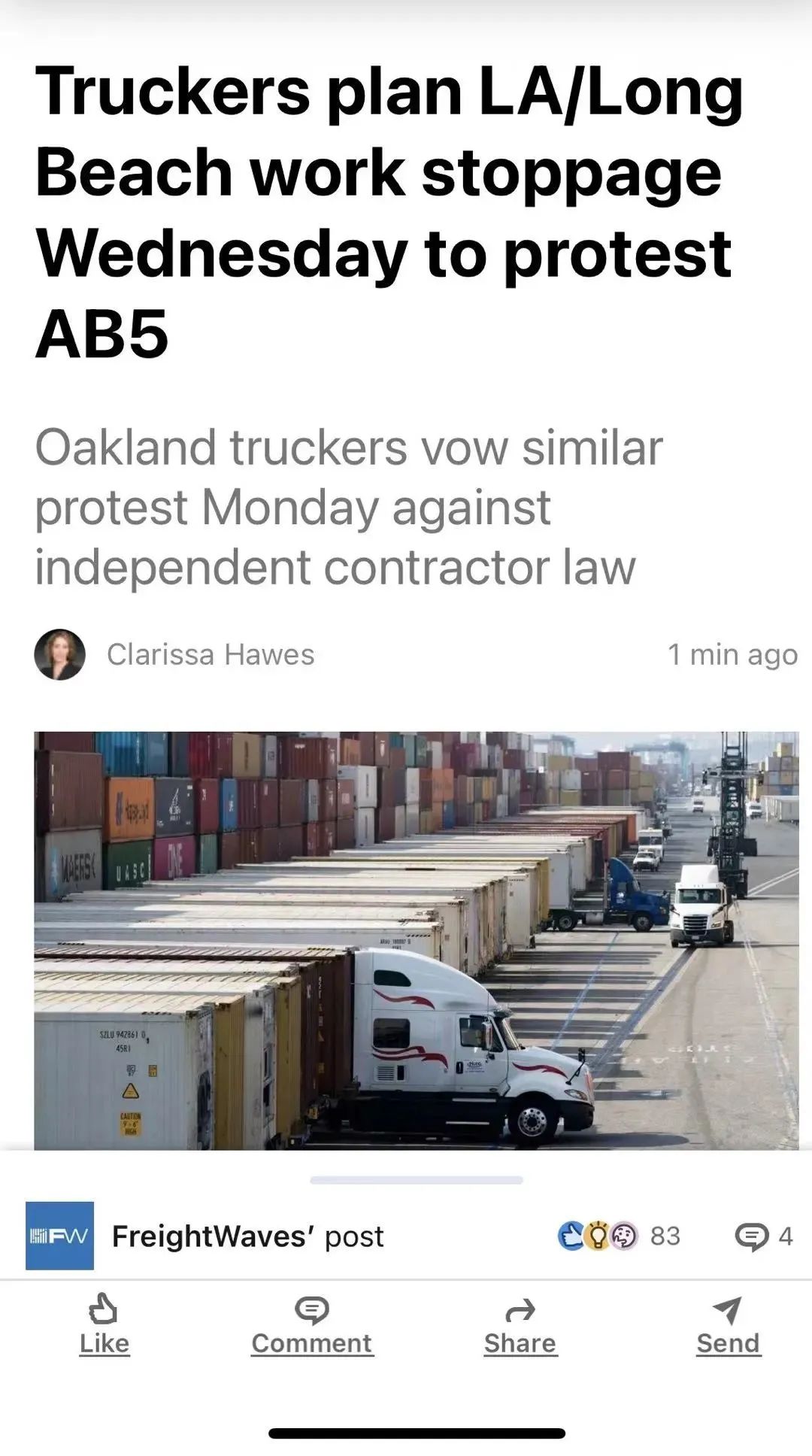
What impact has the dockworkers’ strike had on the ports?
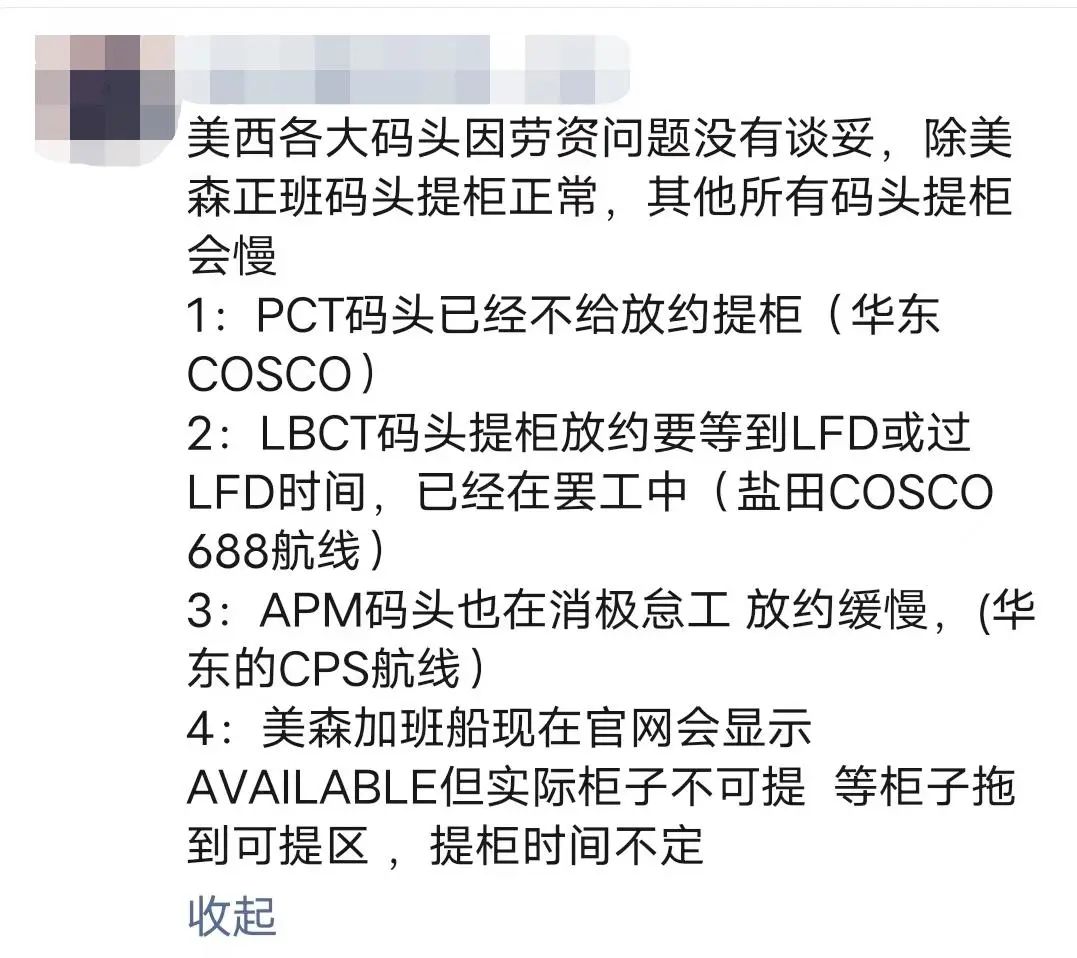
According to freight forwarders: Container pickup at Matson’s regular-service terminal is operating normally, while pickups at all other terminals will be slow.
1. PCT terminal has stopped releasing pickup appointments (East China COSCO)
2. At LBCT, pickup appointments are only released on or after the LFD. The terminal is already affected by the strike (Yantian COSCO 688 service)
3. APM terminal is also working slowly, with pickup appointments being released slowly (East China CPS service)
4. Matson’s extra vessels may show as AVAILABLE on the official website, but the containers are not actually ready for pickup. Pickup times are uncertain while the containers are being moved to the pickup area.
In addition, a freight forwarder shared a live update from the US today:
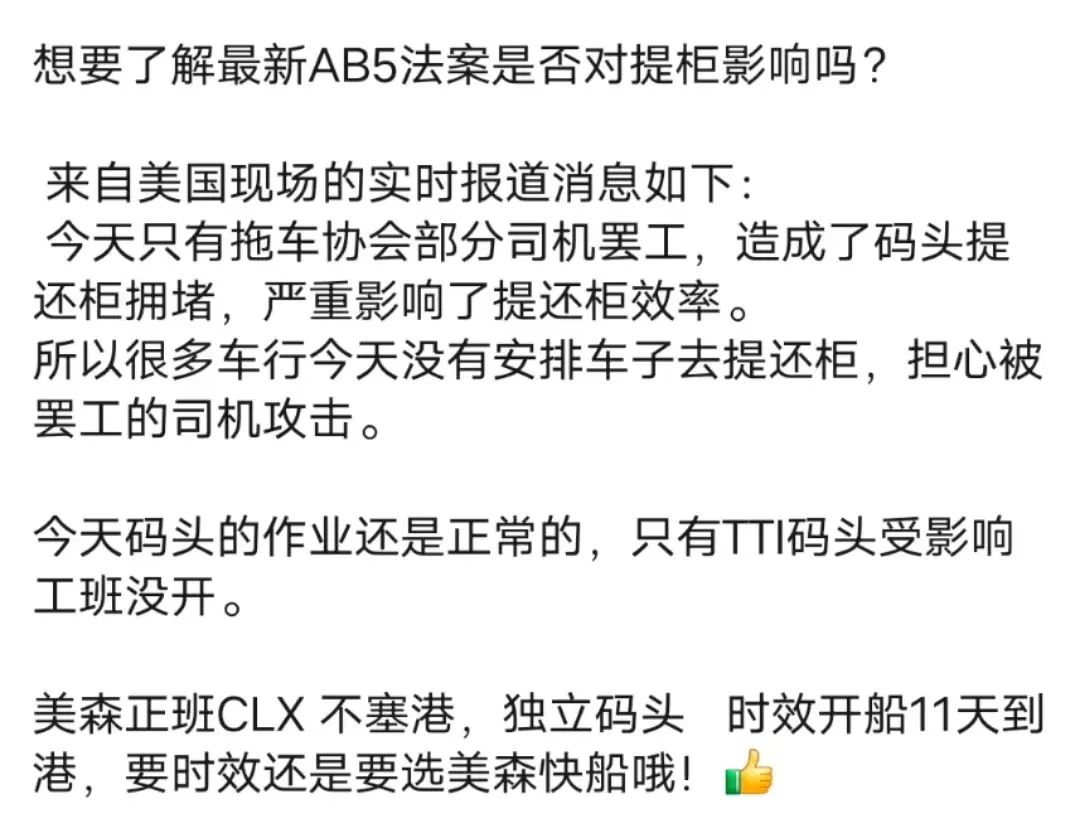
“Today, only some drivers from the trucking association went on strike, causing congestion with container pickups and returns at the terminals and seriously affecting their efficiency. As a result, many trucking companies did not send trucks to pick up or return containers today, fearing attacks from striking drivers. Terminal operations were otherwise normal today; only the TTI terminal was affected, with one shift not operating.”
According to forecasts by NRF and Hackett Associates, US retail container imports are expected to reach 2.31 million TEUs in July, up 5.3% from last year, keeping port freight volumes elevated. In addition, total US retail container imports are expected to increase significantly in 2022 compared with 2021.
Foreign media have also reported that July this year will be the fourth-busiest month on record for U.S. ports, and port congestion is expected to continue.
Amazon Prime Day is currently underway, coinciding with the peak shipping season. Sellers are shipping more than usual, and dockworker strikes are likely to worsen port congestion and logistics delays. Cross-border sellers should prepare shipments in advance to minimize the risks and losses affecting their goods.
Original source: https://mp.weixin.qq.com/s/Xv1gmRxNc8U8Com9G-nU2A
