
Asia–Europe container ships are rerouting around the Cape of Good Hope…
Recently, at least 13 large container ships chose to detour around the Cape of Good Hope on their return voyages from Northern Europe to Asia.
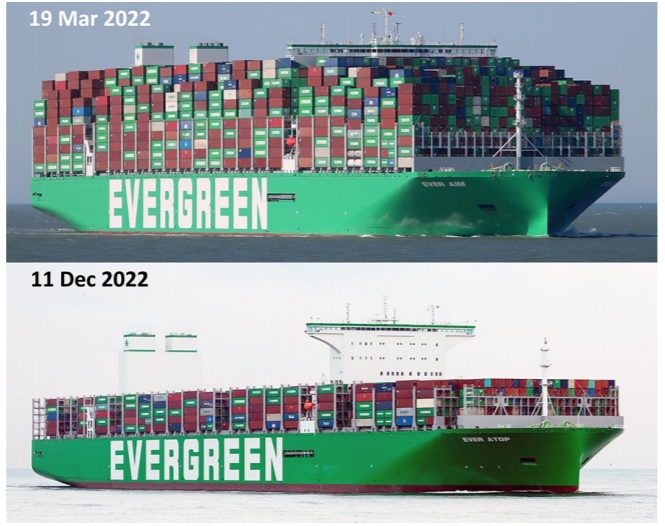
In its latest weekly market report, Alphaliner noted that at least 13 large container ships of over 14,000 TEU have recently avoided the traditional Suez Canal route and detoured around the Cape of Good Hope on their return voyages from Europe to Asia.
All of these vessels chose to detour around the Cape of Good Hope on the return leg of their Asia–Europe routes. No similar cases have yet been seen on the outbound leg.

Alphaliner predicts that more large container ships may choose this route in the coming weeks.
According to Alphaliner's analysis, the main reasons large container ships are detouring around the Cape of Good Hope are weak transportation demand in the current container shipping market, falling freight rates, excess capacity, and the high transit fees charged by the Suez Canal.
Vessel capacity provides a clear indication that cargo volumes on the Asia–Europe route have fallen sharply compared with the first quarter of this year. Many smaller vessels that recently entered the market have already been forced to withdraw. Diverting or sailing at reduced speed is also a way to reduce capacity.
Meanwhile, with fuel prices having recently fallen and Suez Canal transit fees remaining high, detouring around the Cape of Good Hope is undoubtedly more economical.
For example, a voyage from Rotterdam to Singapore via the Cape of Good Hope is 3,500 nautical miles longer than one through the Suez Canal. At a vessel speed of 16 knots, this adds nine days to the voyage. With the current average price of IFO380 fuel at $400 per ton, the extra nine days at sea would consume approximately 1,100 tons of fuel, costing around $440,000.
By comparison, transit fees for a large container ship passing through the Suez Canal are about $1 million. This means that, despite the extra nine days at sea, the vessel can save approximately $600,000. With capacity currently in excess and demand weak, this is a worthwhile option.
Original source: https://mp.weixin.qq.com/s/_kWKVrvvznYxFh4_3AVbGg
