
EU B2C Customs Clearance Adds PID in November: What's Required and How to Submit It
From November 1, 2026, import declarations for applicable shipments of goods sold and sent by Chinese sellers to EU consumers will require a Product Identifier (PID). The information must correspond to each product; a single identifier cannot be used for the entire parcel.
The direct impact on shippers is that they need to prepare product codes in advance and submit electronic data through the shipping system. Entering the PID only on the commercial invoice does not replace the electronic declaration.
What is a PID?
A PID is a product identifier used to identify a specific product and link it to the seller, manufacturer, and relevant product codes. The declaration must distinguish between merchant product identifiers, non-standardised manufacturer product identifiers, and any existing standardised manufacturer product identifiers.
Which shipments require PIDs?
The European Commission's guidance dated October 5, 2026 states that, from November 1, the PID requirement applies to imported distance-sale shipments with an intrinsic value not exceeding 150 euros, primarily involving B2C goods sold to EU consumers. B2B transactions that do not normally qualify as such distance sales fall outside the scope of this requirement.
DHL's currently published operating guidelines still require PIDs for all B2C e-commerce shipments imported into the EU, regardless of value. For shipments exceeding 150 euros sent via DHL, we recommend preparing all required information in advance and confirming the shipping channel's actual documentation requirements before dispatch.
A PID is not a single number, but product identifiers from different sources
| Type | Requirement | Common examples and where to find them |
|---|---|---|
| Merchant product identifier M-PID | Required | Product identifiers used by the sales website or platform, such as a product Listing ID or SKU |
| Non-standardised manufacturer product identifier NS-PID | Required | The manufacturer's or brand owner's model number, manufacturer part number, style number, or internal product code |
| Standardised manufacturer product identifier S-PID | Required if available | Standard codes such as EAN, UPC, GTIN, or ISBN found on product packaging or in manufacturer documentation |
The first two types are mandatory. Not every product has a standardised code, but any existing code must be provided.
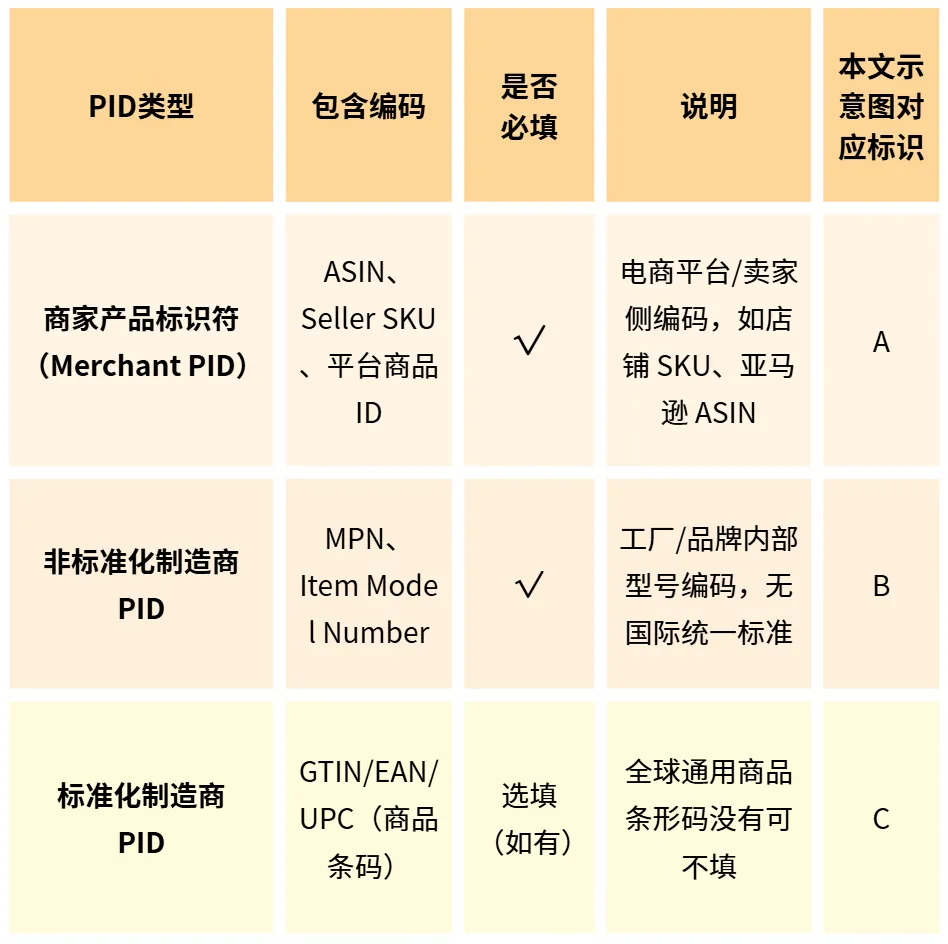
Three types of PID and declaration requirements (Source: DHL Express Club)
The merchant code should identify the specific product on the sales page. Manufacturer codes should be obtained from the manufacturer or supplier; do not simply enter an order number or tracking number in their place. The EU guidance states that, where an NS-PID genuinely does not exist, one should be assigned by the manufacturer, producer, or product supplier.
Examples from domestic e-commerce platforms
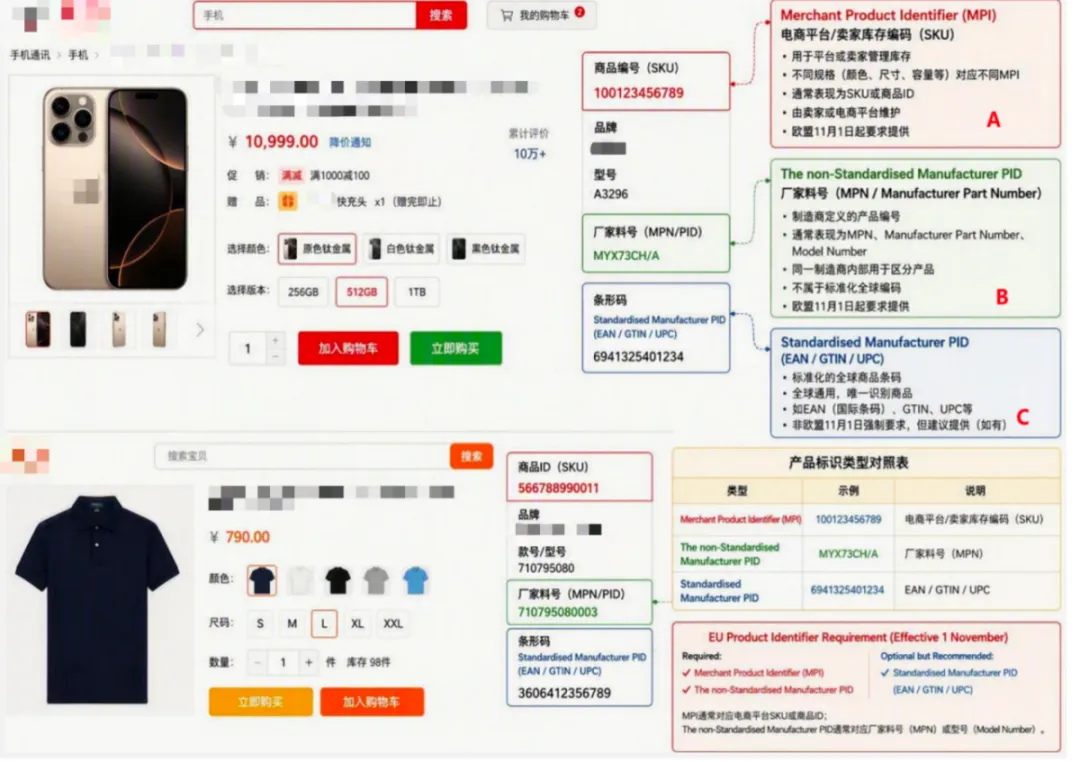
Examples of product identifiers on domestic e-commerce platforms (Source: DHL Express Club)
Examples from international e-commerce platforms and product codes
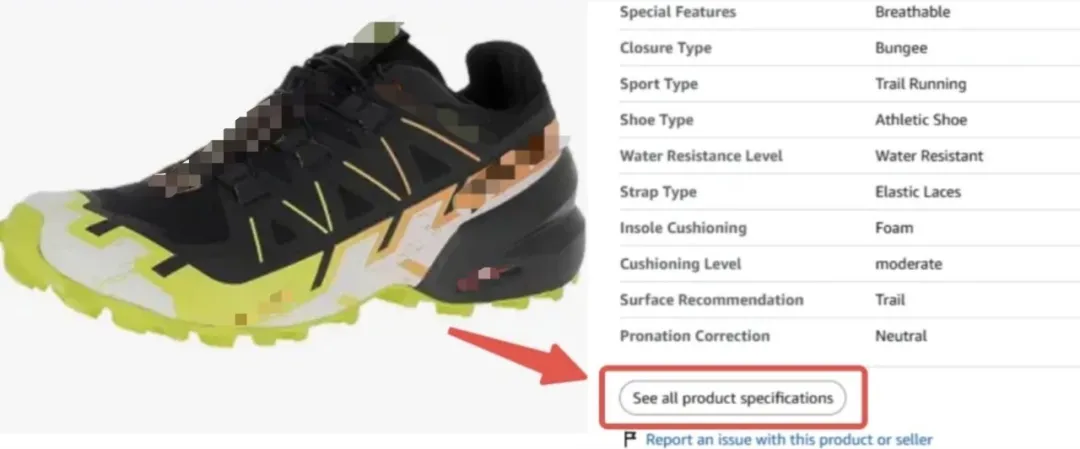
Examples of product identifiers on international e-commerce platforms (Source: DHL Express Club)
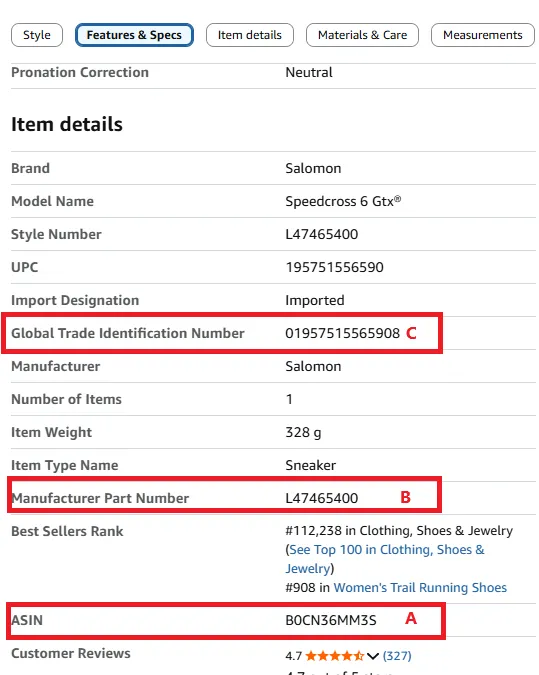
Additional examples of product identifiers on international e-commerce platforms (Source: DHL Express Club)

Examples of product codes (Source: DHL Express Club)
Each product needs its own identifiers, not one entry for the entire shipment
If a shipment contains multiple different products, the respective PIDs must be provided for each one. Even if several products are grouped under the same declaration line item, this does not justify omitting any product's identifiers.
For example, if headphones and a protective case are packed in the same parcel, prepare the merchant and manufacturer codes for the headphones and the protective case separately. Any standardised codes available for either product must also be provided.
The following entries are illustrative only and must not be used directly in an actual declaration:
| Product | M-PID | NS-PID | S-PID |
|---|---|---|---|
| Black Bluetooth headphones | The product code corresponding to the sales page | The manufacturer's headphone model number or part number | Enter the actual standard code if available |
| Headphone protective case | The product code corresponding to the protective case | The manufacturer's protective case model number or part number | Enter the actual standard code if available |
Submit electronic data when preparing shipping documents
When shipping via DHL, enter the corresponding PIDs in the product details section of the electronic shipping system. The information on the invoice should match the electronic data; do not put the codes only in invoice remarks or attachments.
ESHIP product detail fields
In the ESHIP operating example published by DHL Express Club, the PID fields are located under product details.
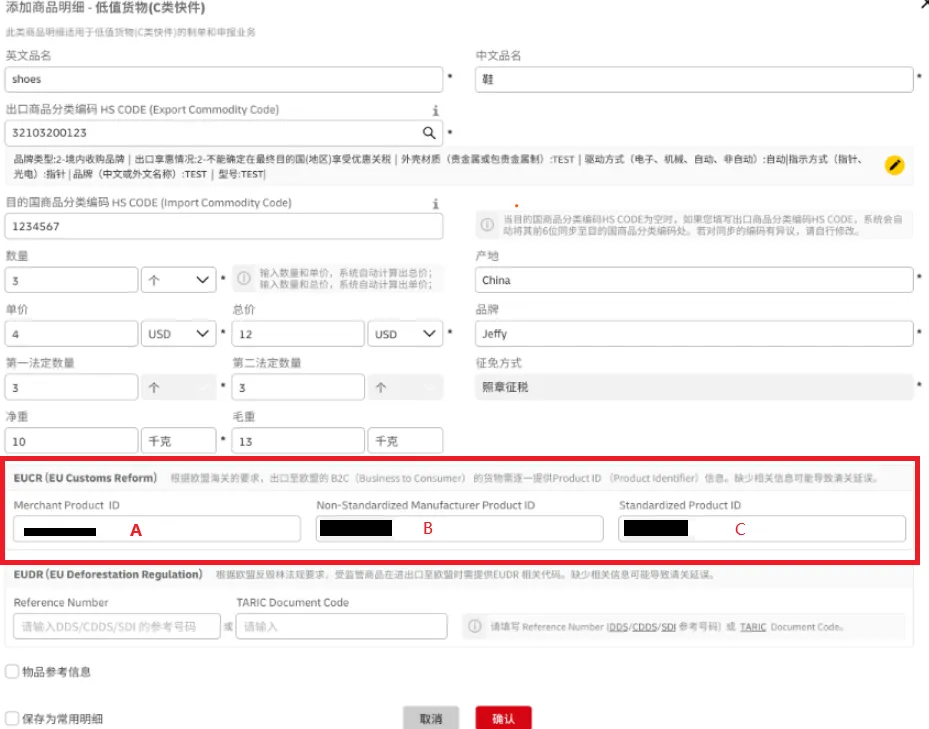
PID fields in ESHIP product details (Source: DHL Express Club)
The original guidance also notes that the display of the Product ID fields depends on the recipient's “Business Contact” setting. When creating a B2C shipment from outside the EU to the EU, enter the recipient's actual type and check the product detail fields.

Example of business contact settings in ESHIP (Source: DHL Express Club)
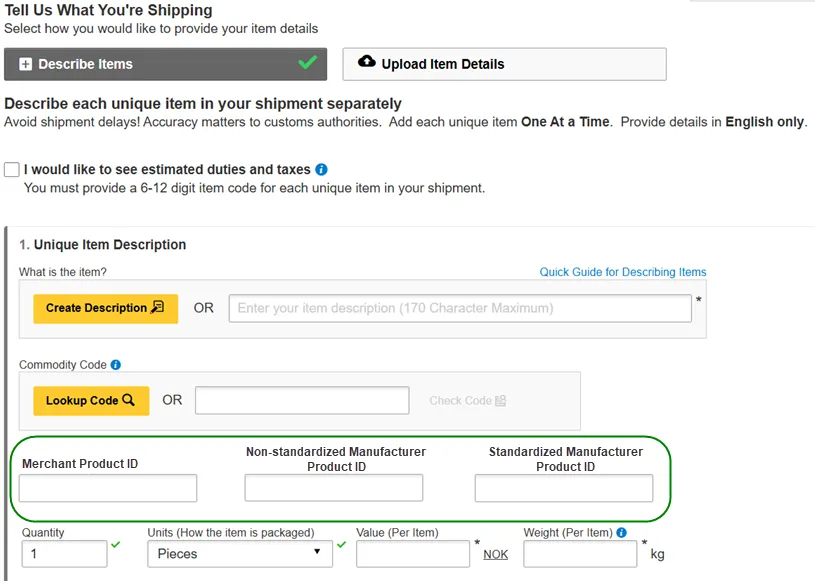
Additional example of shipping label settings in ESHIP (Source: DHL Express Club)
Sellers are advised to prepare a product information sheet in advance, mapping each product's sales platform identifier to its manufacturer model number and standardized code. When asking a logistics provider to prepare shipping labels, provide this information item by item for the products actually being shipped, rather than chasing suppliers for details just before dispatch.
What happens if you do not provide it?
If a mandatory PID is missing, incomplete or incorrect, customs may request additional information, delay customs clearance, or refuse release and return the shipment to its origin. Providing a PID does not exempt goods from inspection; products must still meet the applicable import and product compliance requirements.
Sellers planning to ship EU orders before 11/1 are advised to review the information for products currently on sale, prioritize filling in missing manufacturer model numbers and platform product identifiers, and confirm that their shipping label system can submit the corresponding electronic fields.
Related Lookups
Sources
- DHL Express Club: “New mandatory fields for EU B2C customs clearance starting in November (11)! How should you fill in the PID?”, 2026/10/8. The images in this article are sourced from that article.
- DHL Official Website: New EU import rules for B2C e-Commerce shipments: Product Identifiers (PID).
- European Commission: The temporary EUR 3 customs duty and the Union handling fee — Guidance for Member States and Trade, 2026/10/5 edition, Chapter 8.
